 Apocalypse (Qiyamah): Isma’ili’ Muslim Perspectives on the “End of the World” (Part 1).
“The Qiyāmah is true and will happen, but a full explanation of it, either in theory or in common doctrine, is not easy.” Paul Walker, (Abu Yaqub al-Sijistani: Intellectual Missionary, 73)
“We, the Imāms in descent from Imām Husayn, are present until today and we shall remain until the Qiyāmah and even after the Qiyāmah.” – Imām Shāh Āgā Shāh ‘Alī Shāh
In Islamic thought, the ideas and themes relating to the “end of the world” fall under the doctrine of qiyāmah (“rising”, “resurrection”). The Qur’an contains hundreds of references to qiyāmah under various names including: the Day of Resurrection, 2:85; the Day of Mutual Disillusion, 64:9; the Day of Mutual Calling, 40:32; the Day of Decision, 37:21; the Day they are raised up, 7:14; the Day of Judgement, 1:4; the Day of Gathering together, 50:44; the Day they come forth [from the tombs], 70:43; the Day of Imminence, 40:18; the Day when the Hour comes, 30:12; the Day of Reckoning, 14:41.
For the people of the exoteric (ahl al-ẓāhir), qiyāmah is when physical world comes to an end and all things return to God for the final judgment. They expect qiyāmah to be preceded by a series of natural disasters and physical events including earthquakes, disasters, wars, the opening of the heavens, and other such things. However, the esoteric (bāṭin) perspective views qiyāmah in an entirely different sense. In this sense, Abū Ya‘qūb al-Sijistānī™writes that the real meaning of qiyāmah is hidden from the masses and only available to the People of the True Realities:
“Among the greatest of matters in which the People of Realities (ahl al-ḥaqā’iq) take pride is the recognition of qiyāmah, its causes, and the tokens and signs that follow these, about which the people of the exoteric (ahl al-ẓāhir) are in the dark.” – Abū Ya‘qūb al-Sijistānī, (Kitāb al-Iftikhār, 181)
Commentary: The “end of the world” is to the individual, referring to the passing of his first creation (Revelation 21:1), taking place in what the Bible refers to as “the end of days,” when a spiritual rising or resurrection is to take place. The “Day of Judgement” is a time of spiritual purification through a spiritual regeneration (Matthew 19:28), referring to the spiritual rebirth that takes place through a spiritual or internal judgment. “The Day of Gathering together”(Genesis 49:1) is the “Day of Judgement,” which is to the individual, the chapter revealing what takes place throughout the day of judgment, which takes place over a period of time. “The People of True Realties” are those that have experienced a spiritual resurrection in this spiritual [day of] judgment, which is to take place before the physical [day of] judgment, “the tokens and signs” of God’s spiritual judgment being a purified mind and heart.
In the esoteric perspective, qiyāmah is not a physical event, but rather, it is a spiritual or soul-related event which has effects and manifestations in the physical world. This is because qiyāmah is related to creation (khalq). Imām Sultān Muhammad Shāh explains that “the creation according to Islam is not a unique act in a given time, but a perpetual and constant event” (Memoirs of the Aga Khan). Similarly, qiyāmah is an event that occurs in every moment and instant – although it is hidden and not perceived by most people.
Commentary: Qiyāmah (“rising, resurrection”) is “a spiritual or soul-related event” because the soul, by definition, is the vital principle in man credited to the faculty of thought, emotion, and action, which are made pure (healed) though a spiritual resurrection. It has “effects and manifestations in the physical world” because the external is the manifestation of the internal, which is why Jesus said to clean first that which is within the cup and the platter, that the outside of them may become clean (Matthew 23:26), which is to say, purify the thoughts of the mind and the emotions of the heart, so the outside of them, the physical action, becomes pure. “Qiyāmah is related to creation (khalq)… a perpetual and constant event” in that it is a spiritual creation, “a new heaven and a new earth,” (Revelation 21:1), symbolizing “a new mind and a new heart,” an ongoing event— a process that has been encoded in the book of Genesis, meaning creation.
Just as time is continuous, it can be felt, measured and aggregated in certain intervals – seconds, minutes, hours, days, years, decades, etc, in the same way, the qiyāmah which is ever-occurring can be experienced in intervals. When a being fulfills and actualizes the limit (hadd) of its own existence, this is the “metamorphosis of being which esoteric parlance designates as qiyāmah, resurrection.” (Henry Corbin, Temple and Contemplation). Thus, qiyāmah is a direct culmination and the recompense (i.e. reward, punishment) of the previous actions and events in the life of a particular being. All human beings undergo qiyāmah as they ascend from one level of consciousness to the next – such as the progression through the mineral, vegetable, animal, and rational souls in earthly life.
Commentary: This spiritual creation, a spiritual birth, like the “qiyāmah,” is “experienced in intervals,” a spontaneous occurrence that cannot be forced into a fixed period of time in that it is spiritual— a “resurrection” of truth, which takes place over time through a strong desire to be healed; to be saved from the many false perceptions and beliefs we have accepted throughout our life because of the things we saw, heard, felt, and experienced—“the previous actions and events in the life of a particular being.” With each false belief we overcome, we remove a layer of invisible flesh, coming closer and closer to freedom, like a butterfly emerging from its cocoon— “the metamorphosis of being.” Eliminating them is a process; a metaphorical climb, symbolized by Jacob’s ladder, (Genesis 28:12), representing this spiritual ascension process that equates to a spiritual resurrection.
Thus, we can speak of involuntary qiyāmah – when the human soul experiences the death of the physical body and is resurrected in the astral or imaginal body. There is also the voluntary qiyāmah – when the human soul undergoes the final death and attains union with God – such as the spiritual mi‘rāj of the Prophet Muhammad. A collective qiyāmah is something experienced by a group of human beings – such as a community, a nation, a civilization, or even humanity as a whole.
Commentary: The “voluntary qiyāmah” is called “the second death” (Revelation 20:14), a spiritual death that is to take place before our physical death. Through it, we experience “the end of the world,”– a spiritual event, as previously mentioned— the passing of our first creation through the forming of our new creation (Revelation 21:1).
When qiyāmah is understood as “the end of the world” – it is referring to a collective qiyāmah. This qiyāmah is foremost a spiritual event which has consequences and effects in the physical world – as manifested in human history. However, the term “world” in this expression “the end of the world” cannot be understood as the planet Earth or the physical universe as a whole. A “world” (‘ālam) refers to the entire way of life, sets of conventional beliefs, paradigms of understanding, and discourses of knowledge (‘ilm) that subsist amongst human beings in a particular period of human history – called a cycle (dawr). The “end of the world” refers to the conclusion (“death”) of one such historical cycle (dawr) and the beginning (“birth”) of a new cycle. This transition – from one historical cycle (dawr) to the next cycle – is the qiyāmah or the “end of the world”. The great Ismā‘īlī Muslim philosopher Sayyidnā Nasīr al-Dīn Tūsī explains as follows:
“Amongst these [worlds] is the revolution that takes place when one cycle changes to another, when one prophetic tradition (sunnat) and custom changes to another, and one religion (millat) changes to another. Each one of these is a world, each of these is a separate world, and when each changes, one may say that such and such a cycle, a prophetic tradition and a religion, which did not exist and then came into existence, was a separate world which underwent non-existence and then existence… Thus, when one cycle, which is another world, begins, the founder (wādi‘) of the religion of that cycle is made manifest, and his appearance, form, language, dialect, speech, behavior, deeds and spiritual path, both in whole and part, are completely different [from the previous cycle].” – Nasir al-Din Tusi, (The Paradise of Submission, 68-69)
Commentary: “The end of the world” takes place (to the individual) when the false perceptions and beliefs that formed his first heaven and earth, pass away. “The People of the True Realities” are those that go through this spiritual creation process. Among the peoples of religion, there are those that have made the transition from serving God through the physical works of ritualistic practices, to serving God through spiritual works. “Amongst these [worlds] is the revolution that takes place when one cycle changes to another, when one prophetic tradition (sunnat) and custom changes to another… each one of these a world…” One such “revolution” and “world” took place two thousand years ago, when Jesus brought the spiritual teachings to those of religion. But it was rejected, the religion formed from the perversion of those teachings (Christianity) no different than the religion that rejected them to begin with (Judaism), both assigning literal interpretations to that which is spiritual. Had they drank of the spiritual drink, and eaten of the spiritual meat that was offered them two thousand years ago, we would all be drinking of the new wine; thinking spiritually about the words written in the Book.
The Seventh Cycle, which follows the previous Six Prophetic Cycles, is the Special Cycle of the Great Qiyāmah because it happens only once in every several thousand years. This Cycle of Qiyāmah lasts for one thousand years and is marked by special conditions and events which are the culmination, fulfillment and apex of the previous Six Prophetic Cycles. When the Sixth Cycle – the Cycle of Prophet Muhammad – reaches its climax and conclusion, it is then that the Cycle of Qiyāmah begins:
“In the current cycle of human history, however, it was still expected, as with the earliest Isma‘ilis, that full qiyama, or the Great Resurrection (qiyamat-i qiyamat), would occur at the end of the final millennial era after Adam; that is, at the end of the sixth era initiated by the sixth law-announcing prophet, Muhammad. The Great Resurrection, towards which all the partial consummation of the preceding cycles in history of mankind had been tending, would inaugurate the final, seventh era – the culmination of the ages in the history of mankind.” – Farhad Daftary, (The Ismailis: Their History and Doctrines, II, p. 381)
Different historical periods or cycles are marked by the appearance of God’s Messengers and each cycle (or “world”) lasts anywhere between five hundred or fifteen hundred years. In the language of the Abrahamic scriptures, the cycles are referred to as the “Days of God” (Qur’ān 14:5) or the “Days of Creation” (Genesis): “Lo! Your Lord is God Who created the heavens and the earth in Six Days. Then He established the Throne.” – Holy Qur’ān 7:54Commentary:
Commentary: We entered “the final, seventh era,” with the new millennium, entering what was revealed to me to be the third and final “era of Jacob,” when the worshipping of God through ritualistic practices was to give way to the worshipping of God through spiritual practices. There were “fifteen hundred years” between Moses and Jesus. There were one hundred and fifty years between the death of the spiritual teachings of Jesus (460AD) and the teachings of the Prophet Muhammad (610AD), a tenth of a cycle, which is important because a 10 to 1 factor, when applied to certain timelines (days, years, etc.) serve to reveal the timelines for important historical events, such as the arrival of the next Messenger— the Prophet Muhammad. There were also “fifteen hundred years” between the death of the spiritual truth brought by God’s Messenger Jesus in 460, and the foundation that was laid in 1960 through a 14-year-long revelation that exposed the error in the doctrines of the Christian religion, tearing down the old foundation of religious iniquity in preparation for the restoration of spiritual truth. The “heavens” (plural) of the Holy Quran pertain to consciousness, each heaven a “level of consciousness.” The “heaven” (singular) of the Holy Bible symbolizes the mind, which acquires levels of understanding through six (metaphorical) days of (spiritual) works. The “earth” symbolizes the heart, the seat of spiritual power—“the Throne,” established through a spiritual judgment (Matthew 19:28), the “son of man” symbolizing the seed or word of God (Luke 8:11)— the truth that is to rule from within the heart of man!
According to the esoteric meaning (ta’wīl) of this verse, the six days in which God creates the heavens and the earth are six historical cycles of prophecy and religion. The “world” created in during these six cycles is the “World of Faith” (‘ālam al-dīn).
“The Cycle of every prophet is his ‘day’. The time in which we are now – I mean, the time after the Emissary, al-Mustafa, was sent forth up to the time of the Resurrection – is the ‘day’ of our Emissary. The days of Moses, Jesus, and the other prophets are past… God the Exalted created the lifetime of this world during the span of the prophethood of six prophets, each of whom had his cycle (dawr) and his summons (da‘wat) in his ‘day’ (rūz), and during his day the Emissary summoned people to God… If people were to examine this interpretation, each prophetic community would occupy the position which it indeed occupies: the Christians established on the fifth day, the Jews on the fourth day, the Mazdeans on the third day.” – Sayyidnā Nāsir-i Khusraw, (Between Reason and Revelation, tr. Eric Ormsby, 152-153)
Commentary: The “World of Faith” is the World of Religion, in which mankind worships God on a physical level, the number six pertaining to physical, the past six thousand years being six cycles, or six days, as the Holy Bible teaches us that “one day is with the Lord as a thousand years.” The Christian religion was established in “the fifth day” or fifth century (around 400AD). Isaac was the first Jew, but the Jewish religion was not established until the time of Moses thirty-five hundred years ago— in the middle of the third and forth day.
In each cycle of prophecy, the Enunciating Prophet (Nātiq) reveals a Scripture and a religious Law (shariah). Accompanying the Nātiq and later succeeding him is the person of the Foundation (Asās) – who is the first hereditary Imām of the cycle. The Asās is succeeded by a lineage of Imāms until a qiyāmah – when the prophetic cycle comes to an end and the next Nātiq appears. The institution of Imāmah continues throughout these prophetic cycles – serving as an arc of guidance, continuity and permanence… An overview of these six cycles is as follows:

When the Sixth Prophetic Cycle comes to an end, the Seventh Cycle begins. The Seventh Cycle, in the Qur’anic verse above, is referred to as the establishment of the Throne. This Seventh Cycle is the Cycle of the Great Qiyāmah. This is because a cycle of prophecy consists of the dominance of the religious Law (sharī‘ah) in which spiritual truths (ḥaqā’iq) are concealed in symbols and only available to the initiates. The Cycle of Qiyāmah is when the spiritual truths are unveiled to the public. The meaning of qiyāmah is literally “rising” and the meaning of the word “apocalypse” is “revelation”. Therefore, the qiyāmah or apocalypse is not the end of the physical world, but rather, the revelation, rising or unveiling of spiritual truths to humanity.
Commentary: The world entered “the Seventh Cycle” or the Seventh Day with the new millennium, entering the third and final “era of Jacob;” an era of spiritual awakening. The number seven pertains to spiritual. The world has entered the time of transition; from one cycle to another— from worshipping God through the mind and body (exoteric), instituted through “religious Law (sharī‘ah)” to worshiping God through the Heart (esoteric) — “the establishment of the Throne.”
“The Cycle of Qiyāmah is when the spiritual truths are unveiled to the public.” Revelation of the symbolic code of the Bible (1998-2005) is the key to unlocking the spiritual truths encoded in our Sacred Texts, ancient writings, and coded works. The word “apocalypse” literal means, “lifting of the veil,” the veil symbolizing the carnal mind, which cannot perceive of spiritual truth, symbolized by the veil over Moses’ face, illustrating the inability of the children of Israel (chosen to represent us the people) to perceive of God’s spiritual Law. The removal of the physical veil will be the outward demonstration, the “Hujjat (proof)” that the spiritual, “the cycle of unveiling (dawr-i kashf)” has begun, taking place in the mind of the individual; when what I refer to as the “veil of religious iniquity” is rent, allowing for the resurrection of spiritual truth in the heart of the individual, illustrated by the renting of the veil of the temple upon the death of Jesus (John 11:25), the Christ or Shekhinah power that was once on the earth, now in the earth, transmuted, bringing out of the graves (Matthew 27:51) those that had reached an exceptional degree of holiness while on the earth.
In the cycle of every Prophet, the period of the manifestation of the exoteric (zāhir) dimension of the religious law (sharī‘at) is called the cycle of concealment, and the cycle of every Qā’im, when the manifestation of the esoteric realities of the religious laws (haqā’iq-i sharī‘at) of the Prophets occur, is called the cycle of unveiling (dawr-i kashf).” – Nasīr al-Dīn Tūsī, (The Paradise of Submission, 69)
The Seventh Cycle, which follows the previous Six Prophetic Cycles, is the Special Cycle of the Great Qiyāmah because it happens only once in every several thousand years. This Cycle of Qiyāmah lasts for one thousand years and is marked by special conditions and events which are the culmination, fulfillment and apex of the previous Six Prophetic Cycles. When the Sixth Cycle – the Cycle of Prophet Muhammad – reaches its climax and conclusion, it is then that the Cycle of Qiyāmah begins:
“In the current cycle of human history, however, it was still expected, as with the earliest Isma‘ilis, that full qiyama, or the Great Resurrection (qiyamat-i qiyamat), would occur at the end of the final millennial era after Adam; that is, at the end of the sixth era initiated by the sixth law-announcing prophet, Muhammad. The Great Resurrection, towards which all the partial consummation of the preceding cycles in history of mankind had been tending, would inaugurate the final, seventh era – the culmination of the ages in the history of mankind.” – Farhad Daftary, (The Ismailis: Their History and Doctrines, II, p. 381)
Commentary: Jesus brought the spiritual truth or instruction, which if obeyed, would have brought the peoples of religion out from under the burden of religious law, which they had been under for “fifteen hundred years.” But they rejected the internal and external freedom they would have obtained through spiritual obedience. What followed was the arrival of “the sixth law-announcing prophet, Muhammad.” The spiritual truths of the Holy Bible and Holy Quran are concealed because when presented with the truth that makes us free, man choose bondage; choosing religious law over spiritual truth, entering “the cycle of concealment.” One enters “the Seventh Cycle” or “Cycle of Qiyāmah” through the lifting of one’s metaphysical veil; through his internal or spiritual “apocalypse.” The “Cycle of Qiyāmah lasts for one thousand years.” The Holy Bible speaks of the thousand year reign of Christ, not to be taken literally. Those who enter this elevated spiritual state, through spiritual obedience to God’s spiritual works, are ruled by what constitutes “christ” —“love and truth.” Jesus said the hour cometh when the true worshippers of God shall worship Him in spirit and truth. The Spirit of God is Love, the greatest commandment of all. “The Great Resurrection” is the resurrection of truth, through which our Love is made perfect.
The person who begins and initiates the Cycle of Qiyāmah is not a Prophet – since Muhammad is the Seal of the Prophets. Instead, the august personality who begins this Qiyāmah is called the Qā’im al-Qiyāmah (Lord of the Resurrection) and he is the Seventh Nātiq after the previous Six Messengers. Sayyidnā Nāsir-i Khusraw (d. 1088) describes this as follows:
“The interpretation of ‘establishing Himself upon the Throne’ is the execution of the command of God by the Qā’im al-Qiyāmat (‘Lord of the Resurrection’), which is the Throne of God and which will be manifest after his Six Days have passed… ‘Tomorrow’ is the cycle to come. That ‘tomorrow’ in which the wise take such delight is the day of True Resurrrection, when the shadows of ignorance will be lifted from humanity by the light of His knowledge, just as God says, ‘The earth will be illumined by the light of its Lord’.” – Sayyidnā Nāsir-i Khusraw, (Between Reason and Revelation, tr. Eric Ormsby, 153)
Commentary: “The Seventh Cycle of Qiyāmah began with the Seventh (Sabbath) Day, which the world entered with the new millennium. It was to be a day of rest, but man has not been doing the spiritual works for the past six thousand years; during “The Six Cycles.” Man has not been hearing the voice of the Prophets, but has been stoning them through his refusal to change. The “august personality” refers to the exalted state or authority of one that has become the “Lord of the Resurrection” through the resurrection of truth within his Heart—“the Throne of God,” which being synonymous with the “the kingdom of God,” symbolizing “the realm of the Heart,” is within us (Luke 17:21) The earth, like the throne, symbolizes the heart, which is to be ruled and illuminated by the spiritual light of truth— “The earth will be illumined by the light of its Lord.”
It is true that within a single prophetic cycle, i.e. the Cycle of Prophet Muhammad, there are minor Qā’ims as well— approximately every seventh Imam in the chain of Imāmat is the Imām-Qā’im of the minor Cycle and brings a minor qiyāmah for the community of believers. Each minor Qā’im reveals new esoteric teachings to the community of believers relative to his own age. Some examples of the minor Imām-Qā’ims during the Cycle of Prophet Muhammad are Imām Muhammad ibn Ismā’iI, Imām al-Mu’izz, Imām al-Hakim bi-amr Allāh, Imām Hasan ‘alā dhirkihi al-salām, Imām Shams al-Din Muhammad, and others. All of these minor Qā’ims serve as previews or foretastes of the actual Qā’im – the Qā’im al-Qiyāmah who is the Seventh Nātiq – while the minor qiyāmahs are foreshadowings of the Great Qiyāmah. Henry Corbin explains that:
“The name of Qā’im, resurrector, is reserved par excellence for “he who will rise up”, the Lord of the Resurrection, at the close of the final Period of our Cycle. Yet each partial Qā’im at the end of each Period of the Septenary, as well as each Imam and each member of the Order, is also, potentially, Lord of the Resurrection, a limb of his mystical body, an oratory in his Temple of Light.” – Henry Corbin, (Temple and Contemplation, 162)
Thus, the Qā’im al-Qiyāmah (Lord of the Resurrection) is not merely one of the seven Imāms, but rather, he is the Qā’im of the entirety cyclical history and his qiyāmah is the Great Qiyāmah. Sayyidnā Nāsir-i Khusraw explains the difference between the Qā’im (Seventh Nāṭiq) and the previous Prophets as follows:
“The Jews respect Saturday and do not work on it because of this, i.e. God has rested on this day. But they do not know that when the Messengers told people this, they meant that the people should know that, by the command of God, there will come to this world Six Messengers who will instruct the people (to work). When the Seventh will come, he will not instruct, rather, he will give them the reward of their work. And they called it Saturday and said to respect it and that day is the day of the Lord of Resurrection (Qā’im-i Qiyāmat), may peace be upon him.” – Sayyedna Nasir-i Khusraw, (Wajh-i Din, Chapter VII, tr. Faquir Muhammad Hunzai, ‘Ilm Magazine, Vol. 11, No. 4/3, December 1987 / March 1988, p. 36)
Commentary: The Messengers and Prophets have brought man the instruction for the spiritual work (purification) that was to be completed prior to the Seventh Day. But man, having eyes that cannot see, and ears that cannot hear, has failed to follow the instruction over the past six thousand years, an instruction that is given to us in the book of Genesis, which means creation. Those that do complete their six (metaphorical) days of (spiritual) works in this seventh day, will receive “the reward of their work, ” which is a new heaven and earth, symbolizing a new mind and heart. We remember and keep God’s one-time Sabbath Day holy through the purification of our heart, as written in God’s Law: “Remember the sabbath day, to keep it holy.”
 A visual depiction of the Seven Prophetic Cycles of Adam, Noah, Abraham, Moses, Jesus, Muhammad, and the Qa’im. Each Cycle spans approximately 1,000 years.
Indeed, the very purpose of the previous Prophets, Messengers and Imāms and their missions was to prepare the way for the arrival of the Qā’im and the Cycle of Qiyāmah. The function of the Qā’im is to be the “lord of reckoning” instead of a “lord of sharī‘ah” like the Messengers of God before him.
Commentary: We are in the beginning of the seventh day; in the beginning of the seventh-thousandth year since the fall in the garden, symbolizing the spiritual decline caused by man’s spiritual disobedience. The children of Israel (chosen to represent us the people) broke God’s spiritual law, which Moses illustrated as he came down off the mount, placing themselves under the carnal law. One becomes the “lord of reckoning” instead of a “lord of sharī‘ah” when he offers spiritual sacrifices instead of the carnal sacrifices made under the law (Psalms 51:16,17; Isaiah 1:13), through which one accounts for the spiritual debt he has incurred, balancing the scales through a spiritual judgment.
“Through the Qā’im, God completes and fulfills his promise in the way of bestowing intellectual emanations upon all souls. The Qā’im is crucial to the completion of the cycle of revelation. He is intrinsically related to the cycle in its growth and harmony or its corruption and disunity. He negates all natural structures since the very event of the advent of the Qā’im symbolises the end of one order, the judgment, and the beginning of another order, different yet not discontinuous.” – Boustan Hirji, (A Study of Risalah al-Bahira, PhD Thesis, McGill University, Montreal, October 1994, 155)
Many religions have described the coming of the Qā’im under different terms and symbols such as the Messiah, the Kalki Avatara, Matreyah, the Mahdi, and others. According to the Ismā‘īlī gnosis, the Qā’im is not some random person who appears out of nowhere, but he comes from the lineage of the Imāms from the progeny of the Prophet Muhammad and Imām ‘Alī ibn Abi Tālib. In the Holy Qur’ān, all the various names of qiyāmah such as the “Hour”, the “Last Day”, etc. are references and allusions to the holy personality of the Qā’im. The Prophet Muhammad once said: “I and the Hour were sent like these two forefingers.” That is to say, Muhammad is the final Prophet to appear before the coming of the Qā’im. The Prophet’s analogy of himself and “the Hour” as “two forefingers” means that they are both similar in the sense of being divinely-inspired human beings.
Commentary: There is an order to follow—“the order of Melchizedek” (Psalms 110:4), “the bestowing of intellectual emanations” upon one’s soul requiring first, the purification of one’s heart through a spiritual judgment. David was a man after God’s own heart, David and Jesus speaking to the condition of man’s heart (Psalms 26:25, Matthew 15:19).
There is the physical lineage and the spiritual lineage. The Holy Bible teaches that one can be grafted into the lineage of Abraham, becoming “the seed of Abraham” through physical baptism —“In Isaac shall the seed be called,” the word called referring to the literal name received through physical baptism in the previous “era of Isaac.” But we have entered the spiritual “era of Jacob” (the Seventh day or cycle), in which we are drafted into the lineage of Abraham through the spiritual judgment that equates to spiritual immersion in the spiritual name, which grafts us into the lineage of Abraham, representing God, the Father of many nations. A transition from the carnal to the spiritual— “ the advent of the Qā’im symbolises the end of one order, the judgment, and the beginning of another order, different yet not discontinuous.” Therefore, the “two forefingers” are not of the old order, the biblical figures of which were Moses and Aaron, Joshua and Caleb, Elijah and Elisha, John and Jesus. But of the new order, in which the “two forefingers” symbolize the two divine attributes that inhabit “divinely-inspired human beings.”
In Ismā‘īlī gnosis, the Qā’im al-Qiyāmah is the most eminent human being in the entire Cosmos. His soul encompasses and integrates the virtues of all the Prophets, Imāms, sages, saints, and luminaries who preceded him. In this sense, Henry Corbin refers to the Qā’im as the “Perfect Child” because he is the most perfect soul to be created by the Universal Soul and it is through him that Universal Soul actualizes its own perfection.
“It is said, for example, that the Qā’im, the aim and goal of all the hudūd, the degrees or “horizons”, is the Grand Cycle of which the Imāms are the periods or partial cycles, just as each Imām is himself a cycle in relation to his hudūd. … It is also said that the Qā’im is the “coalescence” (majma), the corpus mysticum of all the hudūd; each of the Imāms has his own corpus mysticum, his Temple of Light, and all are gathered together and integrated in the Sublime Temple of the Resurrector. – Henry Corbin, (Cyclical Times and Ismaili Gnosis, 99)
Commentary: Jesus said that we must “become as a little child,” which is to be pure in thought, emotion, and action— “the most perfect soul.” Indeed, every individual that does the spiritual or internal works, through which his soul is made perfect, becomes “his own corpus mysticum, his Temple of Light,” his Temple symbolizing his Heart, which is made full of light; full of truth through God’s soul-purification process. The word corpus means the body of a person or animal, especially when dead, the completion of our spiritual works or judgment resulting in a spiritual death (Revelation 3:1,2), through which we become “The Temple of the Resurrector,” having resurrected truth in that spiritual temple called the heart!
Over one thousand years ago, several Ismā‘īlī pīrs, hujjats, dā‘īs, and philosophers offered prophecies, descriptions, and explanations of the how the Great Qiyāmah would occur and what its signs and effects would be. It must be remembered that since Qiyāmah is a spiritual event, then all the verses and descriptions of it in the Qur’ān and other scriptures must be understood symbolically using the technique of ta’wīl (esoteric interpretation).
In a summary form, we now relate the major “Signs” of the Qiyāmah and the appearance of the Qā’im al-Qiyāmah as outlined in the books of the Ismā‘īlī da‘wah:
1) The Night of Power (laylat al-qadr)
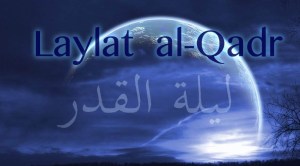 And verily, We revealed him in the Night of Power. And how can We convey to you what is the Night of Power? The Night of Power is greater than a thousand months. The Angels and the Spirit descend in it upon all decrees by the permission of their Lord. Peace it is, until the rising of the Dawn. – Holy Qur’ān 97:1-5
The beginning of the Cycle of Qiyāmah is the appearance of the Night of Power (laylat al-qadr). Exoterically and historically, the Night of Power was one of the last odd nights of the Month of Ramadān. But esoterically in light of the qiyāmah, the Night of Power, refers to an august personality in the World of Faith who begins the Cycle of Qiyāmah.
All Nātiqs were accompanied by their Asās – the first Imām of the new Cycle who served as the Hujjat (proof) and Bāb (gate) of the Nātiq – like Imām ‘Ali was for the Prophet Muhammad, or Imām Shith (Seth) was for Prophet Adam. Similarly, each Imām has a son who serves as his Hujjat/Bāb and later succeeds him – like Imām Ja‘far al-Sādiq was for Imām Muhammad al-Bāqir.
On the same lines, the Qā’im al-Qiyāmah is also accompanied by his own Hujjat or Bāb – except that whereas the Hujjat/Bāb/Asās of every Nātiq or Imām came after him, the Hujjat or Bāb of the Qā’im comes before him. That is to say, the Qā’im’s own father or the preceding Imām (instead of his son or the succeeding Imām) will serve as his Hujjat or Bāb.
“Before the advent of the seventh cycle, governed by the Qa’im, comes the Lahiq or Hujjat of the Qa’im. This is noteworthy, as the hujjat of an Imam is generally his contemporary. The Hujjat of the Qa’im, however, is the harbinger of the advent of the Sabbath.” – Shafique Virani, (The Days of Creation in the Thought of Nasir Khusraw, Institute of Ismaili Studies)
Commentary: “It must be remembered that since Qiyāmah is a spiritual event, then all the verses and descriptions of it in the Qur’ān and other scriptures must be understood symbolically using the technique of ta’wīl (esoteric interpretation).” It is for this reason that we have been given revelation of the symbolic code of the Bible (1998-2005), the key to unlocking the spiritual truths encoded in the literal Word of God — in the Holy Bible and the Holy Quran, which are written in a “symbolic language.” Our understanding of which is the “advent of the seventh cycle.”
The “Night of Power” is referred to by some as the “dark night of the soul,” when the suppressed emotions of the heart (via the power of the heart) are brought to the surface, the instruction for which is encoded in the creation story. An “august personality” refers to one that has entered an exalted spiritual state, being in a position of power and authority, the state and position of both Joseph and Jesus, which are allegorical, sharing the same symbolic meaning.
The “Imām Shith (Seth)” is spiritual, symbolizing the re-appointed seed of Adam, through which we are made a new creation, God’s physical creation serving as “the Hujjat (proof)” for this spiritual creation, through which one becomes “the last Adam.” The spiritual works, which bring our new creation into existence within us, was Jesus’ message, resulting in a spiritual resurrection of spiritual truth, which is why Jesus said, “I am the resurrection,” and why the dead man that was thrown into the sepulchre of Elisha (Kings 13:21) “revived, and stood upon his feet.” Elijah was the “harbinger” (forerunner) of Elisha, as John was the “harbinger” (forerunner) of Jesus. Elisha and Jesus, each serving as “the Hujjat (proof)” of “The Qā’im al-Qiyāmah (Lord of the Resurrection).”
The Qā’im, in the symbolic language of the Qur’ān, is called the “Last Day” (yawm al-ākhirah) or the Seventh Day (in the Bible). And therefore, the “Last Day” is preceded by the greatest of all nights – in the language of the Qur’ān, this is called the Night of Power (laylat al-qadr). According to the science of ta’wīl, the Night of Power stands for the great Imām who functions as the Ḥujjat or Bāb of the Qā’im and the entirety of Sūrat al-Qadr is a metaphor for the exalted personality of this Imām.
Commentary: The “Seventh Day” began with the new millennium; the beginning of the 7th thousandth year (2 Peter 3:8) since the spiritual decline of mankind, symbolized by the fall in the garden. It is “The Day of Gathering Together” (Genesis 49:1), the chapter that reveals the spiritual process through which one takes on the “exalted personality,” becoming his own “Hujjat or Bāb of the Qā’im.”
“…the Hujjat of the Qā’im comes before him in the World of Faith and he is the Night of Power (laylat al-qadr).” – Sayyidna Nasir-i Khusraw, (Wajh-i Din, Discourse 33)
Commentary: Religion, the “World of Faith,” with its (exoteric) interpretations and practices, fall under what the Bible calls “the beginning of faith.” There would have been no need for the “Night of Power” had it not been for Religion, which does not teach on the spiritual (esoteric) works that prove our faith, through which we receive “ the end of faith” (1 Peter 1:9), receiving the salvation of our soul.
“The Night of Power (laylat al-qadr) is a symbol (mathal) of his Bāb (gate) and Hujjat (proof) who is going to come before him. And thus the Bāb of the Qā’im is the lord of universal explanation (sahib al-bayan al-kulli) and the true unveiling (kashf al-haqiqi).” – Sayyidna al-Mu’ayyad fi’l-Dīn al-Shirāzī, (al-Majalis al-Mu’ayyadiyyah, Volume II, 612)
Commentary: “The Night of Power” is symbolic— a spiritual event, an understanding of which comes through “the true unveiling”; through a spiritual apocalypse, which literally means, lifting of the veil— the removal of the veil of religious iniquity demonstrated through religious ritualistic practices (Isaiah 1:11-13).
The Night of Power is greater than a thousand months. The inner meaning of this is that the Hujjat of the Qā’im shall be greater than a thousand Imāms. This is because the Hujjat of the Qā’im will be “the lord of universal explanation and the true unveiling” – meaning, his teachings will reveal spiritual truths and insights in clear, succinct and unprecedented manner. Indeed, the Qā’im’s Hujjat will be the greatest Imām of all the Cycles of Prophecy going back to Adam:
“His saying, ‘Laylat al-Qadr is better than one thousand months’, alludes to the Bāb of the Qā’im, peace be on his mention, [who is] greater than all of what is established by the manifestation of the grades of the intellects, from the legatees of the possessors of the religious laws and their most radiant degree.” – Sayyidna al-Mu’ayyad fi’l-Dīn al-Shirāzī, (Majālis al-Mu’ayyadiyyah, Volume III, 8)
“The Night of Power is better than a thousand months.” That is, the Hujjat of the Qā’im is superior in knowledge to a thousand Imams, although collectively their ranks are one.” – Sayyidnā Nāsir-i Khusraw, (Wajh-i Din, Discourse 33)
Commentary: “The Night of Power is greater than a thousand months” because it is a spiritual event that restores the Power of the Heart. Saul slew his thousands, and David his ten thousands (1 Samuel 18:7). Saul is associated with Religion, and the Mind. David is associated with Spirituality, and the Heart, which is ten times “greater” (more powerful) when it comes to slaying enemies of the spiritual kind. To become “superior in knowledge” on an intellectual level, one must first become “superior in knowledge” on an emotional level— “Know thyself” (Socrates). This is why the kingdom was rent from Saul and given to one that was “better than” Saul (1 Samuel 15:28), the power being transferred from the mind to the heart. Before the mind can be exalted, it must be abased, the instruction for which is given to us by Moses in the book of Exodus, and by Jesus in the book of Revelation.
The meaning of al-Qadr is the Qā’im of the Progeny of Muhammad (qā’im-i āl-i Muhammad) and the meaning of Laylat al-Qadr is the Hujjat or Bāb of the Qā’im. The Qur’ān explicitly states: “We revealed him in the Night of Power”, i.e. “We revealed the Qā’im in the personality of his Hujjat.” This means that the Qā’im will carry out his mission, reveal his knowledge and display his glory in the physical world through the person of his Hujjat.
This Hujjah or Asās of the Qā’im will be the most publicly known and renowned Imām in the entire world – the people of the zāhir and the bātin – just as the Prophet Muhammad was manifest to both groups of people. Sayyidnā Abū Hātim al-Rāzī and Sayyidnā Nāsir-i Khusraw explain this as follows:
“…the da‘wah is established in the name of the Asās in secret and will become manifest in public in the presence of the Last Completer [the Qā’im].” – Sayyidnā Abū Hātim al-Rāzī, (Shin Nomoto, Early Ismaili Thought on Prophecy, PhD Thesis, 307)
“…the status of the Asās will be manifest at the time of the advent of the Seventh Rank (hadd), namely, the Qā’im, to the people of the exoteric (zāhir) and the esoteric (bātin), as the rank of the Nātiq has become completely manifest to the people of the exoteric and the esoteric prior to the [advent of] the Seventh Rank (the Qā’im).” – Sayyidna Nasir-i Khusraw, (Wajh-i Din, Chapter 19, Section 7)
Commentary: We are in the Seventh Day. The word seven (shibah) comes from root (shaba), meaning to be complete. One becomes “the Last Completer” by completing his spiritual works, following the spiritual teachings of those that came before us, through which we experience a spiritual ascension, symbolized by Jacob’s ladder (Genesis 28:12), the earth symbolizing the heart, the heaven symbolizing the mind. The angels being spiritual messengers, which ascend and descend, bringing messages from our heart to our mind, and back again, through which we are healed mentally and emotionally, reaching spiritual perfection in this lifetime.
The Cycle of Qiyāmah is thus inaugurated in by not one, but two figures – the Hujjat of the Qā’im and the Qā’imal-Qiyāmah. This idea of two messianic figures is also paralleled in the Abrahamic traditions. The Sunni and Twelver Shī‘ī Muslims await the second coming of the Prophet Jesus and the Mahdī of the progeny of Prophet Muhammad. The Jews await Messiah and the second coming of the Prophet Elijah – who functions as the “interpreter” of the Messiah. These are all symbolic designations for the manifestation of the Hujjat of the Qā’im and the Qā’imal-Qiyāmah at the beginning Seventh Cycle – the Cycle of Qiyāmah.
Commentary: The “two messianic figures” are spiritual. Referred to in the Holy Bible as the “two witnesses,” they symbolize the two divine attributes; the epithet of Messiah, which are to be resurrected in the heart of man, through which “the Hujjat of the Qā’im” becomes “the Qā’imal-Qiyāmah (Lord of the Resurrection).” As previously stated, the “two figures” that embodied these divine attributes were: Moses and Aaron, Joshua and Caleb, Elijah and Elisha, John and Jesus. The Jews believed that John possessed the spirit of Elijah. They were right! The book of Revelation reveals when this resurrection is to take place within us, which is after 3 ½ days (Revelation 11:11) or 3500 years (2 Peter 3:8). Moses and Aaron appeared 3500 years ago to retrieve the children of Israel (chosen to represent us the people) out of bondage and deliver them into freedom, symbolizing the spiritual event that is to take place within our heart. The Holy Bible does not speak of a physical return of Jesus. It speaks of a spiritual return, found right in the plain text, yet the carnal-minded Christian (veiled with religious iniquity by following the teachings of Paul) is unable to see it. “The Cycle of Qiyāmah” is spiritual!
2) The Sun and the Moon are united
 A visual depiction of a lunar eclipse. The lunar eclipse is a symbol of the union of the offices of Imamah and Piratan during the Cycle of Qiyamah.
“And when the Moon is eclipsed, and the Sun and Moon are united,” – Holy Qur’ān 75:8-9
According to various Ismā‘īlī texts (i.e. Kitab al-‘Ālim wa’l-Ghulām – Ja‘far ibn Manṣūr al-Yaman; Tasawwurāt – Naṣīr al-Dīn al-tūsī), the Sun (shams) stands for the Imām and the Moon (qamar) stands for the Pīr or Supreme Hujjat (Bāb). The Imām is the spiritual father of the believers and the Pīr or Supreme Hujjat (Bāb) is their spiritual mother. Metaphysically, the Imām is the locus of manifestation of the Universal Intellect and the Pīr is the locus of manifestation of the Universal Soul. The union of the Sun and the Moon at the time of Qiyāmah means that the institutions of Imāmah and Piratan will be united in the person of the Imām during the Cycle of Qiyāmah.
Commentary: Jerusalem symbolizes the Heart— “the mother of us all.”(Galatians 4:6). The Heart is our “spiritual mother.” The earth also symbolizes the heart. Our “spiritual father” is the spiritual power that sows the spiritual seed of truth in our heart, as seed is sowed in the earth, and as the potential father sows his seed into the potential mother. “Father Sun and Mother Earth,” the language of the Native American peoples. The “Sun and the Moon are united” when the “Moon is eclipsed.” The moon (in this context) symbolizes the emotions of the heart, the source of our painful emotions (the false beliefs of our heart) eclipsed by the light of truth, which the sun (in this context) symbolizes (Revelation 21:23).3)
3)When the Stars darken

When the Sun is shining, the Moon and the Stars are present but not visible. This symbolizes the manifestation of the Imam and the concealment of the Ranks of Faith (hudud al-din) in the Cycle of Qiyamah.
“And when the stars darken” – Holy Qur’ān 81:2
“And when the stars are obliterated.” – Holy Qur’ān 77:8
In all the cycles of prophetic history, the Imāms delivered their ta‘līm and ta‘wīl through a hierarchy of representatives and teachers – the bābs, the hujjats, the dā‘īs, and ma’dhūns. This hierarchy makes up the “World of Faith” (‘ālam al-dīn) and is known as the “Ranks of Faith” (hudūd al-dīn). In the World of Nature, the Imām is symbolized by the Sun, his Bābs by the Moon, and the rest of the hudūd by the Stars. This is related to the vision of the Prophet Joseph (Yusūf) when he saw “the Sun, the Moon, and eleven Stars” (see Sūrat Yusūf) prostrating before him.
Commentary: The sun, the moon, and the stars— the lights of heaven, symbolizing the perceptions of the mind, the source of which are revealed to us in the plain text (Genesis 37:9,10). They are false perceptions, which are to be eclipsed by the light of truth.
When the Cycle of Qiyāmah begins and the Qā’im appears in the physical world, the Ranks of Faith (i.e. “the Stars”) will cease their formal functions and the Imām himself will take over their roles. This is the meaning of the Qur’ānic verse:
“The Day We shall summon every people with their Imām.” – Holy Qur’ān 17:71
This is because the Imām, as the Sun of Faith (shams al-dīn) will be manifest to the world and the Moon and the Stars of Faith will no longer be visible. When the Sun is shining in its full glory, the light of the Moon and the Stars cannot be observed, despite their continuous presence. It is also related in a prophetic hadīth:
“Goodness is knotted up in the forelocks of horses till the Day of Qiyāmah.” – Prophet Muhammad, (Sunān Abū Dawūd, Book 21, Number 21.19.44)
“Nasir Khusraw explains that the ta’wil of this is that the da‘wat, the summoning of humankind, will not be severed from the hujjats, symbolised by the horses, and the da‘is, symbolised by their forelocks, till the time of the Qā’im’s manifestation.” – Shafique Virani, (The Days of Creation in the Thought of Nasir Khusraw).
The Ismā‘īlī da‘wah – the formal and practical da‘wah that actively summons people to the recognition of the Imām – will be abolished along with the functions of the Ranks of Faith (also confirmed by Hamīd al-Dīn al-Kirmānī in his Kitāb al-Riyād).
4)The Heavens are rolled up

A visual depiction of the heavens being rolled up into a scroll. The imagery of a scroll serves to symbolize the “scroll of the shari’ah” which is abrogated in the Cycle of Qiyamah.
“The Day that We roll up the Heavens like a scroll rolled up for books (completed),- even as We produced the first creation, so shall We produce a new one: a promise We have undertaken: truly shall We fulfil it. Before this We wrote in the Psalms, after the message (given to Moses): “My servants, the righteous, should inherit the Earth.” – Holy Qur’ān 21:104
Commentary: Jesus said he came not to destroy the law (the abrogation of shari’ah), but to fulfil it. Yet, it is not Jesus the man that fulfils the law, but the spiritual works he spoke of and demonstrated for us while he was on the earth (John 10:37,38). The works of the Father are the works of creation, which we are to “believe,” meaning, to obey.
The “first creation” we produced was not according to God’s instruction. It was formed in a darkness we mistook for light; through lies we mistook for truth (Isaiah 5:20), bringing “woe” meaning “misery, grief.” Through six (metaphorical) days of (spiritual) works, we produce “a new heaven and a new earth,” symbolizing “a new mind and a new heart” (Revelation 21:1).
The various terms in the Qur’ān – “heaven”, “earth”, “mountains”, “seas”, “rivers”, etc. all contain an esoteric or ta’wīlī meaning because they refer not to the physical world (dunyā) but to the World of Faith (‘ālam al-īn). Therefore, the real meaning of “heavens” is the exoteric (zāhir) and the sharī‘ah, and the inner meaning of “earth” is the esoteric (bātin) and the tarīqah. Just as the physical heavens surround and protect the physical earth, the zāhir protects and envelopes the bātin. The “rolling up” of the “heavens” means that the sharī‘ah will be abolished when the Cycle of Qiyāmah begins and the quaking of the “earth” means that the esoteric sciences will become revealed in a sudden way – in the manner of earthquakes – even though people may not be prepared for it.
Commentary: The “heaven” (singular) symbolizes the mind. The heavens (plural) symbolize levels or degrees of spiritual light or understanding. The “earth” symbolizes the heart. The “seas” symbolize the thoughts or memories hidden deep within us, carrying negative and destructive energy, which does not exist in the new creation we are to form/produce (Revelation 21:1). The “mountains” symbolize the things we think are insurmountable. The “quaking of the earth” occurs when we are shaken up on a deep emotional level, the earth symbolizing the heart— the seat of the emotions.
“Al-Sijistānī explains that ta’wīl is necessary for two categories of Qur’ānic verses: one, verses with physical objects such as heaven, earth, and mountains, and two, the allegorical verses. In chapter 12 of Kitāb al-Iftikhār (“The Book of Pride”), al-Sijistānī gives some examples such as Q 21:105: “Before this We wrote in the Psalms, after the message (given to Moses): ‘My servants, the righteous, should inherit the earth’.” This, he suggests, should not be interpreted in the literal sense since it is always the tyrants who take the land. The earth on which vegetation grows is a source of nourishment for all creatures; therefore its inner meaning is the nourishment of the soul (i.e. spiritual knowledge). In another passage, Q 21:104, “The day that We roll up the heaven like a scroll rolled up with the writings,” the “heaven” signifies the sharī‘a which will be abrogated on the judgment day.” – Diana Steigerwald, (“Ismā‘īlī Ta’wīl”, The Blackwell Companion to the Qur’ān, ed. Andrew Rippin, 391)
Commentary: To reiterate, the earth symbolizes the heart, the most important aspect of the soul, the “nourishment of the soul” being what we drink of and eat of spiritually. To drink is to think (in the mind). To eat is to accept (in the heart). What have we been feeding our soul, the vital principle in man credited to the faculty of thought and emotion? We “inherit the earth” through the creation of a new earth (Revelation 21:1), overcoming (via the power of the heart) the painful emotions of our heart (Revelation 21:4).
With respect to the abrogation of the sharī ‘ah at the time of Qiyāmah, Sayyidnā Nāsir-i Khusraw (as per Khwān al-Ikhwān) explains that the sharī‘ah of Prophet Muhammad has two dimensions – the specified (wad‘ī) sharī‘ah and the intellectual (‘aqlī) sharī‘ah. The specificed sharī‘ah refers to specific formal or ritual practices as Salāh (ritual prayer), Sawm (ritual fasting), Wudū (ablution), Hajj (pilgrimage), etc. in their exoteric form – without which mankind can still survive and function. The intellectual sharī‘ah refers to moral and ethical laws such as the laws against murder, stealing, and unethical behavior – without which humanity would plunge into chaos.
Commentary: When the children of Israel (chosen to represents us the people) broke God’s spiritual Law, which Moses illustrated as he came down off the mount, they placed themselves under the carnal law, which they were to observe until they completed the spiritual works that fulfil the carnal law, placing themselves under the spiritual Law of God. The “two dimensions” are synonymous with the two kingdoms: the “kingdom of heaven,” symbolizing the realm of the mind (fourth dimension) and the “kingdom of God” symbolizing the realm of the Heart (fifth dimension). Those that keep the carnal law, “(wad‘ī) sharī‘ah,” are of the fourth dimension. What separates the fourth and fifth dimension, which is a separation between carnal and spiritual, is the spiritual judgment through which religious sharī‘ah is abrogated. Jesus, through the symbolism of his cup and platter parable, teaches us to clean the inside of the cup and the platter so the outside of them becomes clean. If we purify the thoughts of our mind and the emotions of our heart, our actions will be pure, righteousness being a law unto itself— “the abrogation of the sharī‘ah at the time of Qiyāmah.”
“While Nāṣir emphasizes that in the physical world action is necessary for the development and perfection of the human soul, he makes a distinction in the two types of practices of sharī‘a. He divides the sharī‘a into intellectual (‘aqlī) and positional or statutory (wad‘ī). The intellectual sharī‘a is always necessary to maintain the order and discipline of society. Meanwhile the statutory sharīʿa is a temporary measure that conceals certain realities (haqā’iq) that cannot be openly revealed due to the unfavourable time. When the time becomes favourable, these devices are no longer necessary.” – Faquir Muhammad Hunzai, (Nasir-i Khusraw’s Ethical Philosophy, 15)
Commentary: The carnal law the children of Israel placed themselves under was only meant to be temporary; a figure of God’s spiritual Law, which was to be kept until “the time of reformation” (Hebrews 9:9,10)— when the spiritual works that form our new heaven and earth are completed, through which our first heaven and earth passes away (Revelation 21:1). “For verily I say unto you, Till heaven and earth pass, one jot or one tittle shall in no wise pass from the law, till all be fulfilled” (Matthew 5:18). Jesus is referring to the spiritual heaven and earth we formed, not the literal heaven and earth. The external works of the carnal law have no power to perfect the soul, which requires an internal (esoteric) discipline, not an external (exoteric) discipline (e.g., prayer, fasting, pilgrimage, etc.). These ritualistic religious practices, which were once counted as righteousness, are now counted as iniquity (Isaiah 1:13,14). “When the time becomes favourable, these devices are no longer necessary.” That time is now!
It may be wondered as to why the abrogation of the sharī ‘ah must occur in the first place. This is because all sharī ‘ahs were compiled and composed by a Nātiq in accordance with the culture and needs of his time. Furthermore, each sharī‘ah has an outer form and an inner meaning which is like a spirit that inhabits a body. Over time, it is natural that a sharī‘ah becomes worn out and ineffective due to the progression of history and human life – as Sayyidnā Abū Ya ‘qūb al-Sijistānī explains:
“After a long time, the sharī‘ah becomes empty of the ‘spirit of the second age’, particularly, after the advancement of Man with the expansion of the knowledge, his intelligence and his mental facilities.” – Sayyidnā Abū Ya‘qūb al-Sijistānī, (Ithbāt al-Nabuwwat, 343)
When this happens – usually after more or less a thousand years – a new sharī ‘ah is established and a new prophetic cycle begins and the new Nātiq abrogates the old sharī ‘ah and compiles a new one. However, after the Prophet Muhammad, there are no more Prophets. Therefore, the Qā’im will abrogate the specified sharī‘ah while revealing its inner meaning (ta’wīl) and simultaneously, spiritualize and transform the sharī‘ah into a higher mode of ritual practice. The intellectual sharī‘ah – as a set of ethics and moral guidelines – always remains in force and becomes more prominent in the Cycle of Qiyāmah.
Commentary: The religious laws and practices— “the old sharī ‘ah,” serves to keep the outward believer in a physical state of obedience until he becomes an inward believer, through which he enters a spiritual state of obedience— a “higher mode” of observance for Jews and Muslims alike, which is not ritualistic.
5) The Intellectual Da‘wah and the Epoch of Knowledge (Dawr al-’Ilm)

An image depicting how knowledge comes to light. The Cycle of Qiyamah is the Epoch of Knowledge (dawr al-’ilm) and the Qur’anic description of “being raised from the graves” refers to the manifestation of once hidden or concealed knowledge out in the open.
“Our Qā’im will begin a New Summons (du‘ā’an jadīdan).”
- Imām Ja‘far al-Sādiq, (Amir-Moezzi, The Divine Guide in Early Shiism, 119)
The Qā’im al-Qiyāmah will inaugurate a new intellectual and gnostic da‘wah (da‘wat al-jadīdah al-‘ilmiyyah). This is the difference between the Summons of the Qā’im and the Summons of the previous Six Prophetic Messengers. The Summons of the Prophets was an exoteric (zāhirī) and physical (‘amalī) Summons whereas the Summons of the Qā’im is intellectual (‘aqlīyyah) and gnostic (‘ilmīyyah):
“Sijistānī specifies that the summons of [Prophet] Muhammad, when likened to the Hour, are ritualistic whereas the summons of the Qā’im is intellectual. The reason the Qā’im is absent at the time of the prophet is that his summons are different from that of the prophet… Since the Qā’im’s call is intellectual (da‘wah is ‘ilmiīyah) the Qā’im’s knowledge is not visible; whereas the Prophet’s (raūl) call (da‘wah) is ‘amalīyah. Therefore, while hypocrites may enter the dawah of a prophet, only the sincere can enter the dawah of the Qā’im; and their souls will be recompensed according to that effort of sincerity.
Sijistānī holds that God has ordained the da‘wah of the Qā’im as intellectual, not ritualistic. It is intellectual because it cannot be operative through force since force would make its followers hypocrites, not true believers. Therefore, the believer must possess knowledge (‘ilm), and the sāhib al-‘ilm is he who deals with those who profess a belief without the use of force, i.e. without an externally motivating factor. Therefore, a believer is defined as the one who is intellectually convinced of the truth of revelation and accepts this as an intellectual conviction and not as a mere acceptance and observance of the law.” – Boustan Hirji, (A Study of Risalah al-Bahira, PhD Thesis, McGill University, Montreal, October 1994, 155)
Commentary: Jesus being raised from the dead illustrated the resurrection of spiritual truth, derived from Greek word, anastasis, meaning a moral recovery of spiritual truth. The spiritual truth or spiritual knowledge of the Holy Bible has been hidden for over thirty-five hundred years, protected by the language in which it is written, which is symbolic— “the Qā’im’s knowledge is not visible.” Jesus spoke in parables, using symbolism to teach us the spiritual things of God. But only the sincere came to understand their meaning— “only the sincere can enter the da,” symbolized by the narrow gate Jesus spoke of. The “true believers” are those that believe (obey, put action to) the internal or spiritual works through which they receive “revelation”— the truth pertaining to their state of being. These spiritual works are not rote, they are not repetitive, they are not forced upon the believer through the power of his mind. They are spontaneous, performed once, the process activated through the power of the heart; through ones strong and sincere desire to be healed on a soul-level. “God has ordained the da‘wah of the Qā’im as intellectual.” But to reach this state of godly intelligence, one must first be made perfect with regard to his emotional state.
The Qā’im begins a new phase of human history known as the Epoch of Knowledge (dawr al ‘ilm). In the periods before the Qā’im, humanity lives in the Epoch of Practice – where both religion and worldly life are oriented around actions (‘amal) and physical resources. After the coming of the Qā’im and the beginning of the Cycle of Qiyāmah¸ humanity enters into the Epoch of Knowledgle (dawr al-‘ilm) in which there is an abundance of knowledge (‘ilm) available in a way that humankind has never seen before. “The final epoch before the advent of the Qā’im is defined as the epoch of practice (dawr al-‘amāl), and is one in which religious practices are obligatory on the part of the individual practitioner. With the establishment of the Qā’im and the commencement of the epoch of knowledge (dawr al-ilm), even the practice of obedience (ta‘ah) to the hudud al-din is no longer required… Therein arises another set of distinctions: between the epoch of practice (dawr al-‘amal) and the epoch of knowledge (dawr al-‘ilm). The dawr al-‘ilm (Epoch of Knowledge) is the time of the Qa’im, and associated with this is tayid, purity, and more significantly, “pure knowledge” (al-‘ilm al-mahd)…. Because the Qa’im is established at the end of the dawr al-‘amāl, the epoch of the Qa’im is the epoch of purity (safa), tayid and ‘ilm, without religious obligation in terms of practice (taklif). – Elizabeth R. Alexandrin, (The Sphere of Walayah: Ismalii Ta’wīl in Practice according to al-Mu’ayyad, PhD Thesis, McGillUniversity, 2006, 322-334)
Commentary: The Prophet Daniel (12:4) speaks of this “epoch of knowledge.” But he also speaks of the wicked, who will not understand it. Only the pure, the wise, understand the knowledge— “pure knowledge.” Wisdom is the application of the understanding of the knowledge, which according to the Prophet Hosea, is lacking in those that proclaim to be God’s people (4:6). Jesus said that the hour is coming when the “true worshippers” of God will no longer go to the mountain or to Jerusalem to worship. The “true believers” will worship God “in spirit and in truth”— “the practice of obedience (ta‘ah) to the hudud al-din is no longer required.” That hour has come!
As a result of the beginning of the Epoch of Knowledge, the esoteric meaning – ta’wīl – of all previous religions and revelations is unveiled to humankind. The Qur’ān foretells this in the verse:
“Do they not wait (hal yanzurūna) for its ta’wīl? The Day when its ta’wīl arrives, those who had forgotten it from before will say: ‘Verily, the Messengers of our Lord came with the Truth.” – Holy Qur’ān 7:53
Commentary: Before the spiritual knowledge of the Holy Bible could be unveiled in it entirety, the foundation upon which the Christian religion was built had to be exposed for its error, which took place through a 14-year-long revelation (1960-1974), received by a man of no religion, and little knowledge of the Bible. I became a student of these teachings; a 19-year-long study (1975-1994) that included the painstaking task of taking nearly every word of the Old Testament back to its Hebrew root— the scholarly aspect of the teachings. Prior to his death in 1994, the teacher the first revelation instructed his students to “tread out the understanding,” which took place through a 7-year-long revelation (1998-2005) of the symbolic code, which further spiritualized the former teachings, through which the spiritual knowledge encoded in our Sacred Texts is unveiled to humankind “in the Cycle of Qiyāmah.”
The Qa’im will unveil the ta’wil (esoteric meaning) of all scriptures and revealed religions during the Epoch of Knowledge. It is through this ta’wil that people will be able to recognize the truth (haqq) in the messages and revelations of the Prophets. This means that the esoteric, philosophical and theological materials of all religions – formerly concealed and guarded except from a select few – will be accessible in the Cycle of Qiyāmah. In most periods of history, the believers could not freely share such material and had to maintain the veil of taqīyya and secrecy. However, the Cycle of Qiyāmah will allow such knowledge and wisdom to be shared freely and in abundance:
“In fact, other Shi’ite factions likewise maintain that, with the coming of the ‘messianic figure’, the obligation of taqiyya and kitman will be annulled and the believers will be permitted to divulge their secrets. In Isma‘ili thought, the secrets revealed at the end of time are the truths (haqa’iq) or the inner aspect of religion (batin) – in effect, the philosophical, theological and esoteric knowledge of every kind. Consequently, in Isma‘ili tradition, acquiring this knowledge and transmitting it to others entails a messianic sentiment – for the disclosure of this knowledge is a clear sign of the end of time… These sciences are entrusted to the Imams, the descendants of ‘Ali, and to their followers (such as Jabir); with the appearance of the ‘messianic figure’, the external aspect of religion (zahir) will lose its primacy and will be replaced by the inner aspect, namely, the philosophical and esoteric sciences… In this era, ‘the tables will be turned’: the hitherto concealed Isma‘ili knowledge will be revealed to all, judgment day will commence and human history will reach its final end.”
Commentary: We are in what was revealed to me to be the third and final “era of Jacob;” an era of spiritual awaking. The word Messiah means anointed, the oil symbolizing the spiritual anointing, symbolized by the two olive trees or two olive branches (Zechariah 4:11-14). In this spiritual era, the “messianic figure” is anyone in whom dwells the anointing of spirit and truth— the epithet of the Messiah, a term used to characterize the nature of a person or thing. The spiritual nature of Messiah is love and truth, which has the power to bring unity and peace among the brethren!
“BEHOLD, how good and how pleasant it is for brethren to dwell together in unity! It is like the precious ointment upon the head, that ran down upon the beard, even Aaron’s beard: that went down to the skirts of his garments: As the dew of Hermon, and as the dew that descendeth upon the mountains of Zion: for there the Lord commanded the blessing, even life for evermore.” Psalms 133
Jesus speaks of those “in the regeneration” sitting on twelve thrones, judging the twelve tribes of Israel (Matthew 19:28), representing the spiritual judgment that is to take place within us (encoded in the 49th chapter of Genesis, where Jacob tells his twelve sons what will befall them in the end of time). The word regeneration means spiritual or moral revival or rebirth.
“I was glad when they said unto me, Let us go into the house of the Lord. Our feet shall stand within thy gates, O Jerusalem. Jerusalem is builded as a city that is compact together: Whither the tribes go up, the tribes of the Lord, unto the testimony of Israel, to give thanks unto the name of the Lord. For there are set thrones of judgment, the thrones of the house of David. Pray for the peace of Jerusalem: they shall prosper that love thee. Peace be within thy walls, and prosperity within they palaces. For my brethren and companions’ sakes, I will now say, Peace be within thee. Because of the house of the Lord our God I will seek thy good” Psalms 122
Commentary written by Sandra L. Butler © 2014 (edited © 2023)

 The two lineages are the same for the 14 generations from Abraham to David. Then, the Matthew lineage takes us through the kings of Judah, while the Luke lineage goes through another line. But there were never to be kings in the first place. Israel rejected God as ruler over them when they rejected God’s mouthpiece, Samuel, meaning heard of God, demanding a king like the other nations, so God gave them Saul, the first king of Israel. God would later rend the kingdom from Saul and give it to David. It is after David that the lineages diverge. The Matthew lineage goes from David to Solomon, and the Luke lineage from David to Nathan, both sons by Bathsheba.

 “The Hopi and Mayan elders do not prophesy that everything will come to an end. Rather, this is a time of transition from one World Age into another. The message they give concerns our making a choice of how we enter the future ahead. Our moving through with either resistance or acceptance will determine whether the transition will happen with cataclysmic changes or gradual peace and tranquility. The same theme can be found reflected in the prophecies of many other Native American visionaries from Black Elk to Sun Bear…”
 THE BIBLE DECODED